
“Education is an absolute necessity, not just for the children themselves but also for global peace, stability and prosperity for all. Schools should be treated as sanctuaries and that it is our common responsibility to ensure that every child has access to an education, even at times of conflict.”
- Ms. Virginia Gamba, Special Representative of the Secretary-General for Children and Armed Conflict during Arria Formula Meeting on the issue of attacks on schools in October 2017.
Latest Developments
SSD Implementation Network
The Safe Schools Declaration State-led Implementation Network promotes cooperation, assistance, and peer-to-peer exchange of experience and good practice amongst states that have endorsed the Declaration.
Resources
Safe Schools Declaration
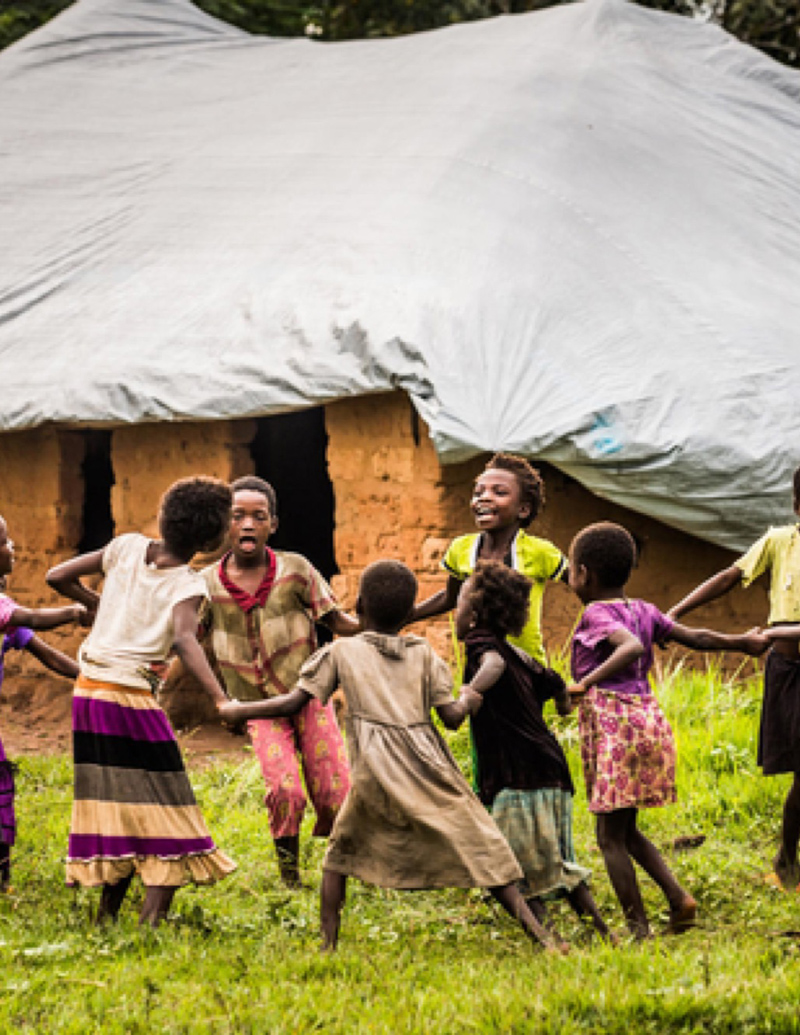
An inter-governmental political commitment to protect students, teachers, schools, and universities from the worst effects of armed conflict.
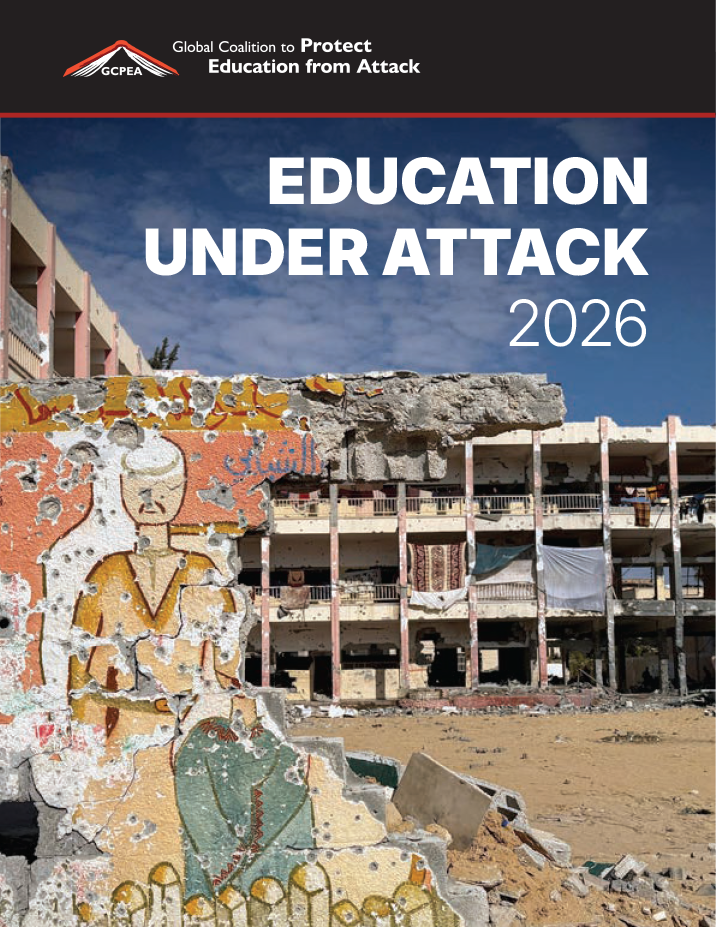
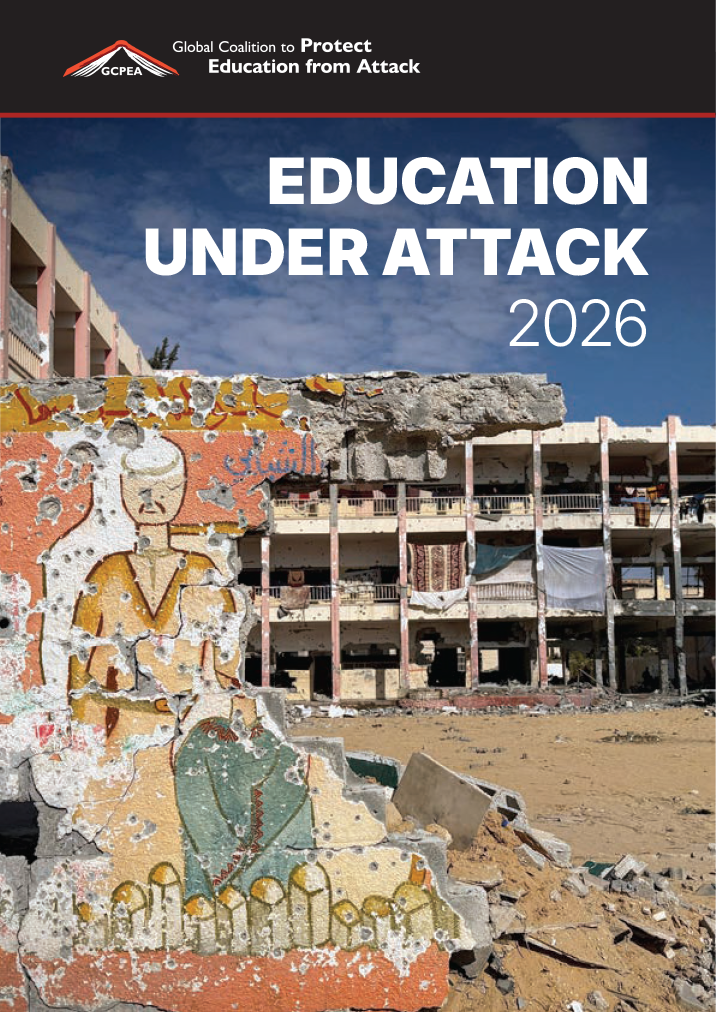
Education Under Attack 2026
A global study of attacks on schools, universities, their students and staff, in 2024 and 2025.
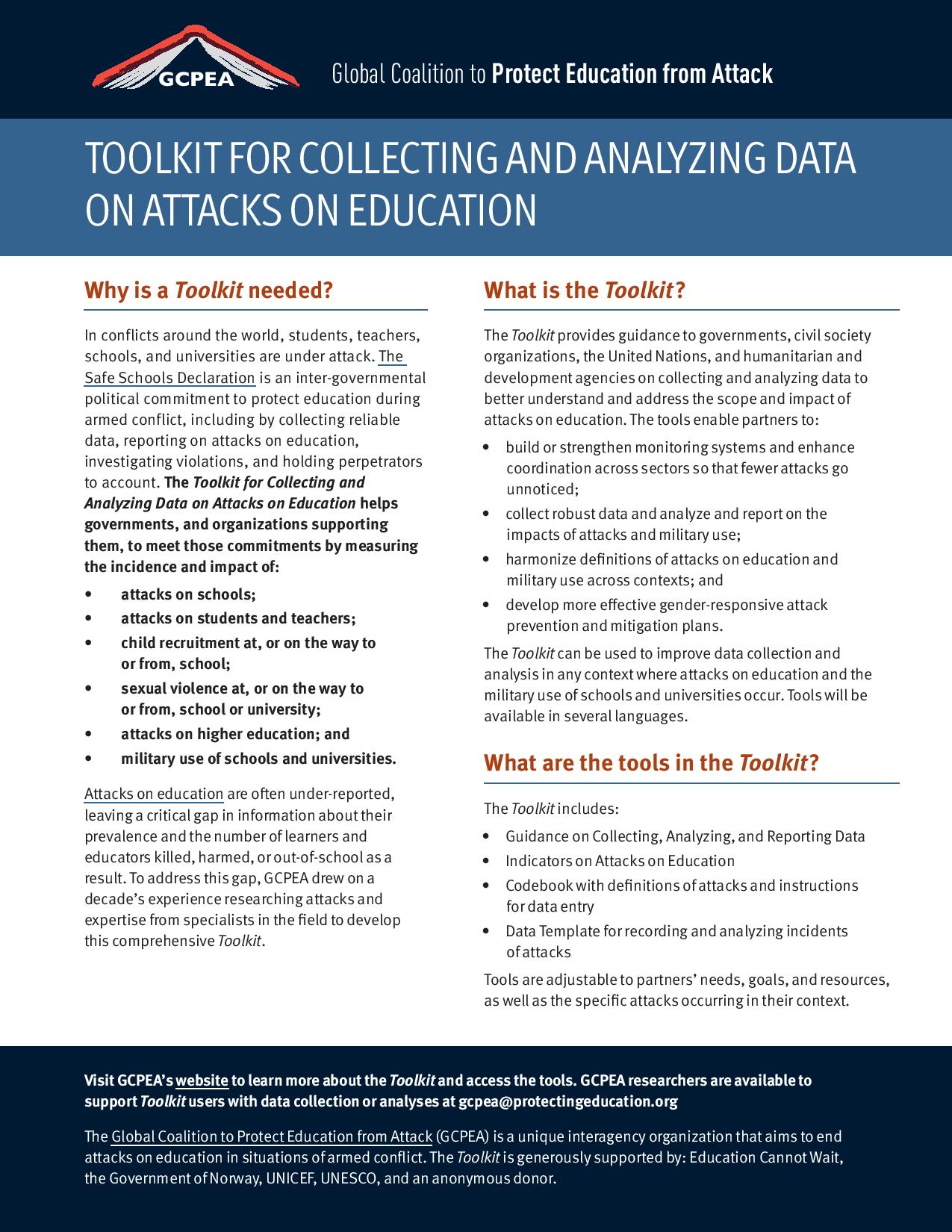
Toolkit for Collecting and Analyzing Data on Attacks on Education
GCPEA, 2021
Available in: English, French, Spanish
Track Attacks on Education (TRACE) Data Portal
GCPEA provides data from its Education under Attack database, along with technical guidance, to the Track Attacks on Education (TRACE) Data Portal. TRACE is led by Education Above All, KoboToolbox, and UNESCO.
News
10 Days in Bogotá: the SSD Implementation Network at Work
The Safe Schools Declaration is a promise made by States. Turning it into safer classrooms takes ministries, monitors, teachers and community organisations — which is what the SSD Implementation Network ...
Da scuole a caserme: nel mondo più che raddoppiati gli istituti utilizzati a fini militari
di Chiara Ludovisi e Matteo Riva 31 Agosto 2026 Dove c'è la guerra, non si va a scuola. Nei contesti di crisi più grave, il 40% dei bambini non può studiare. Sono passati ...