GCPEA News
GCPEA News: Advancing the Protection of Education in Sudan at the UN Security Council
GCPEA, August 12, 2026
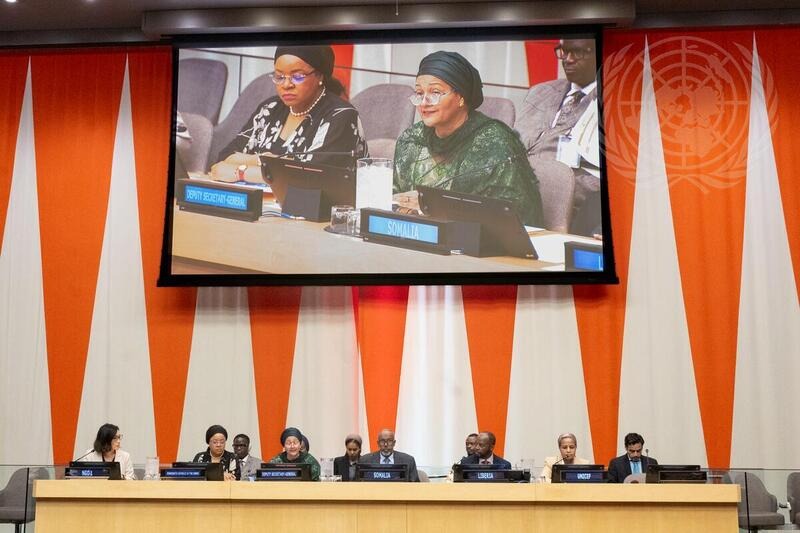
On 7 August 2026, the UN Security Council held an Arria-formula meeting dedicated to education in Sudan: “Safeguarding Education in Sudan: Investing in Peace, Recovery and Stability”. Convened by Somalia and co-sponsored by the Democratic Republic of the Congo and Liberia, it was the first time the Council has examined threats to education through the lens of a regional file.
Deputy Secretary-General Amina J. Mohammed opened the meeting with a number: 1,210. That is how many days Sudan’s war had lasted when the UN Security Council met to discuss the devastating impacts of the war on children’s education. She highlighted that since 2024, the United Nations has verified more than 67 attacks on schools and over 154 instances of military use of schools across Sudan.
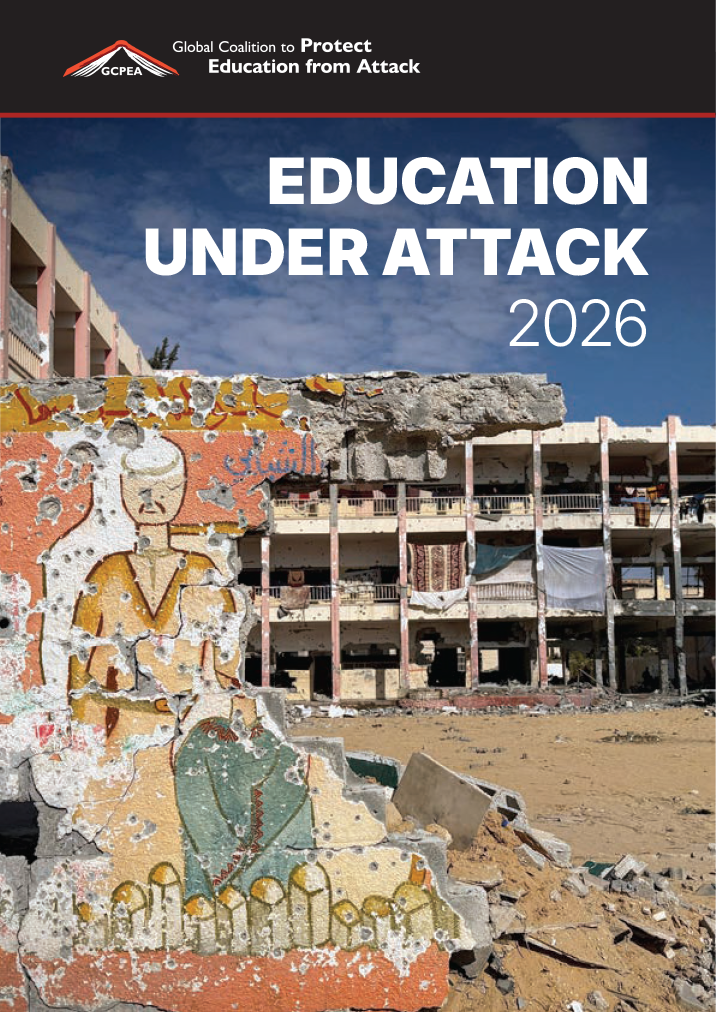
GCPEA’s Executive Director, Lisa Chung Bender, presented key findings and specific patterns of attack in Sudan based on analysis from Education Under Attack 2026. She also emphasized the economic cost of education disruption. Analysis from the UNDP and the Institute for Security Studies shows that if the conflict ends in 2026, Sudan’s GDP could reach US $58.2 billion by 2043. Alternatively, if the conflict persists until 2030, Sudan’s GDP may be as much as US $34.5 Billion lower by 2043. The Coalition also raised concerns over gender-based barriers in access to education and the creation of parallel examination systems, and shared calls for more robust preventive, protective and accountability measures.
UNICEF’s Deputy Executive Director Hannan Sulieman emphasized the relevance of joint efforts towards the implementation of the Safe Schools Declaration (SSD) in Sudan and called on the Council’s Member States to support Sudan in the “adoption of policies that protect schools, learners, and educators while ensuring accountability for grave rights violations.” To this end, she stressed that “education should and must be systematically integrated into national action plans on children and armed conflict to reduce the exposure of vulnerable children and to reintegrate affected children during post conflict recovery.”
Similarly, representatives from Member States and international organizations, including Liberia, Colombia, Austria, Australia, the African Union, the European Union, Spain, Canada, Germany, and Denmark, invoked the SSD, recalling Sudan’s endorsement of the Declaration in 2015. GCPEA stands ready to support Sudanese authorities and parties to the conflict in translating that commitment to concrete actions to protect education.
Many States also shared their financial commitments to the protection of education through Sudan’s 2026 Humanitarian Response Plan and global funds including Education Cannot Wait and the Global Partnership for Education. Despite these pledges, significant funding gaps remain; the Humanitarian Response Plan stands at 60% unfunded and the education sector at 65% unfunded.
In addition to urgently closing funding gaps, GCPEA built on UNICEF’s call to integrate protecting education into Sudan’s National Action Plan, and also urged that the Group of Friends on Children and Armed Conflict in Sudan be re-established, with education explicitly included in their agenda. On a technical level, verification bodies and accountability mechanisms must capture data on attacks on education as a distinct category. Finally, GCPEA called for a single, nationally guaranteed mechanism for Sudanese examinations and certification.
As Ms. Chung-Bender emphasized, “Sudan’s children have not stopped asking for the chance to learn, even as their schools are struck, their teachers killed, their futures deferred.” She called on the Council to do more to protect education both for the nation’s children and its prospects for peace. GCPEA will continue advocating for the implementation of the pledges and other measures to advance the protection of education in Sudan and worldwide.
You can watch the full recording of the meeting here.